Physical AI – When Artificial Intelligence Becomes Physical in 2026

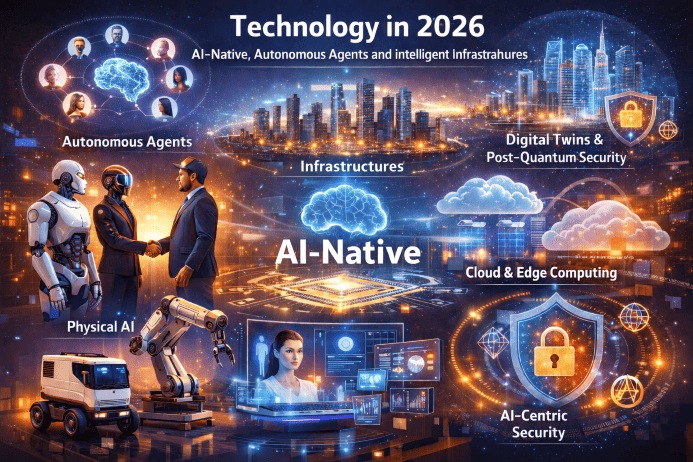
In 2026, artificial intelligence no longer lives only in the cloud or inside software applications. A new category of technologies emerges: Physical AI – AI systems integrated directly into the physical world, capable of perceiving, acting, and making decisions in real time. From autonomous robots to intelligent devices that learn from their environment, Physical AI transforms the way we interact with technology.
1. What Physical AI Is
Physical AI represents the combination of advanced artificial intelligence and physical systems capable of performing actions in the real world. We are no longer talking only about algorithms, but about entities that can observe, interpret, and modify their surroundings.
Essential characteristics:
- Direct integration between sensors, actuators, and AI models
- Ability to learn from physical interactions
- Real‑time adaptation to environmental changes
- High autonomy in decision‑making
2. How Physical AI Works
A Physical AI system is built around three main components: perception, reasoning, and action. These work together to transform information from the physical world into intelligent decisions.
Core components:
- Perception: visual, audio, tactile, or proximity sensors collect data from the real world
- Reasoning: AI models analyze the data and generate predictions or plans
- Action: actuators, motors, or physical mechanisms execute the AI’s decisions
This cycle repeats continuously, allowing the system to react to changes in fractions of a second.
3. Why Physical AI Matters
Physical AI opens the door to a world where technology not only computes but also acts. The impact is massive, as many processes in industry, logistics, and healthcare depend on physical interactions, not just digital ones.
Major advantages:
- Full automation of repetitive physical tasks
- Reduced risks in hazardous environments
- Increased efficiency in production and logistics
- Natural interactions between humans and AI systems
4. Examples of Physical AI in 2026
Physical AI technologies are already implemented across numerous fields, and their applications are expanding rapidly.
Representative applications:
- Industrial robots that learn new assembly procedures on their own
- Autonomous drones for deliveries and inspections
- Smart exoskeletons for medical rehabilitation
- Autonomous vehicles navigating complex environments
- Smart home devices that adapt to user behavior
5. Challenges and Limitations
Although promising, Physical AI technologies come with significant challenges. Integrating AI into physical systems requires safety, robustness, and a deep understanding of real‑world environments.
Current challenges:
- Safety in human‑AI physical interaction
- High production and maintenance costs
- Need for diverse physical data for training
- Strict regulations in fields such as autonomous transportation
6. Conclusion
Physical AI marks a major shift in the evolution of technology. In 2026, artificial intelligence is no longer just a software tool — it becomes a physical presence in our daily lives. From autonomous robots to intelligent devices that learn from their environment, Physical AI transforms the way we work, live, and interact with the world.




Be the first to comment!